
Data centers are massive warehouse-looking buildings. No windows. Tall fence. Super high security. Substation next door, high voltage power lines coming in.
But inside the building, you cannot believe what is going on.
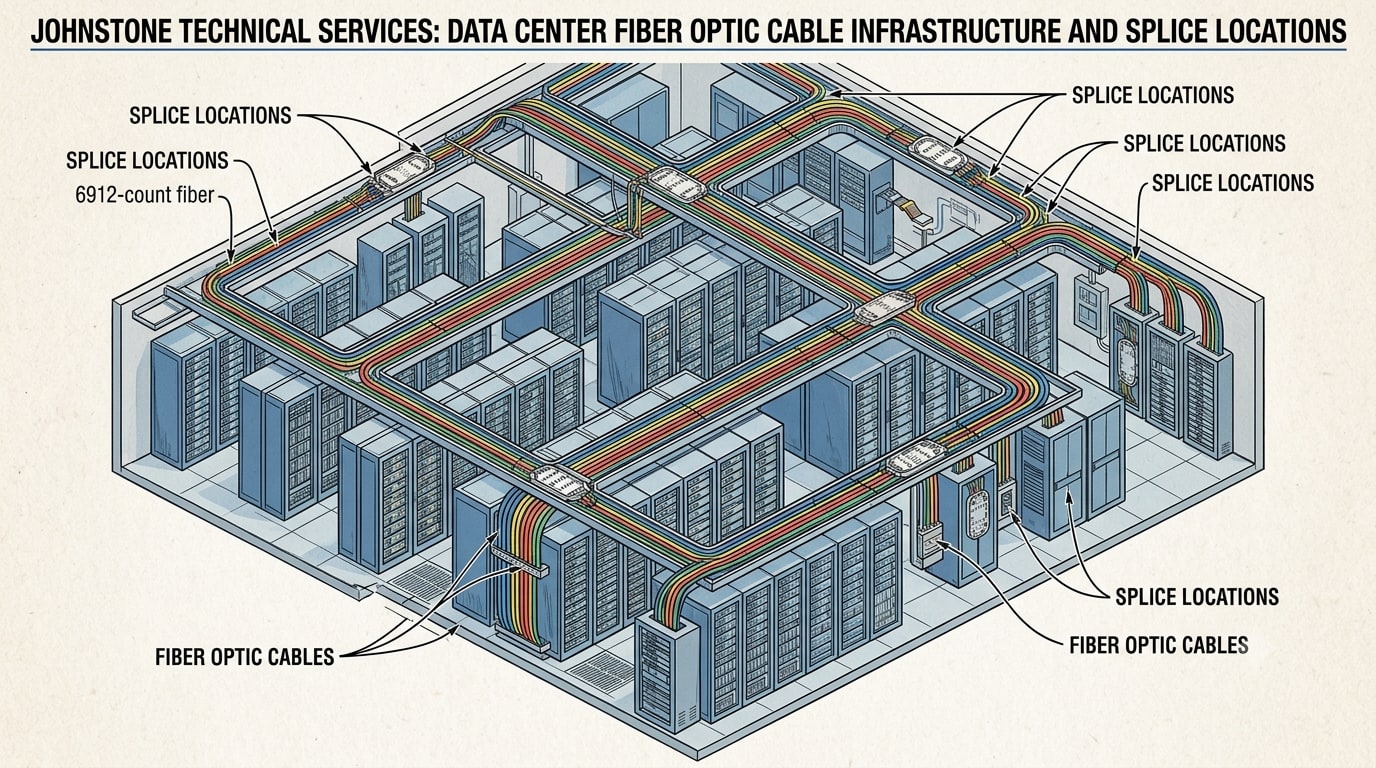
There are servers and GPUs buzzing, and every one of them has multiple strands of fiber running to it. I am not exaggerating. Every single hyperscale data center building can handle hundreds of thousands of individual fibers. The biggest ones in the country are planning for millions of fibers.
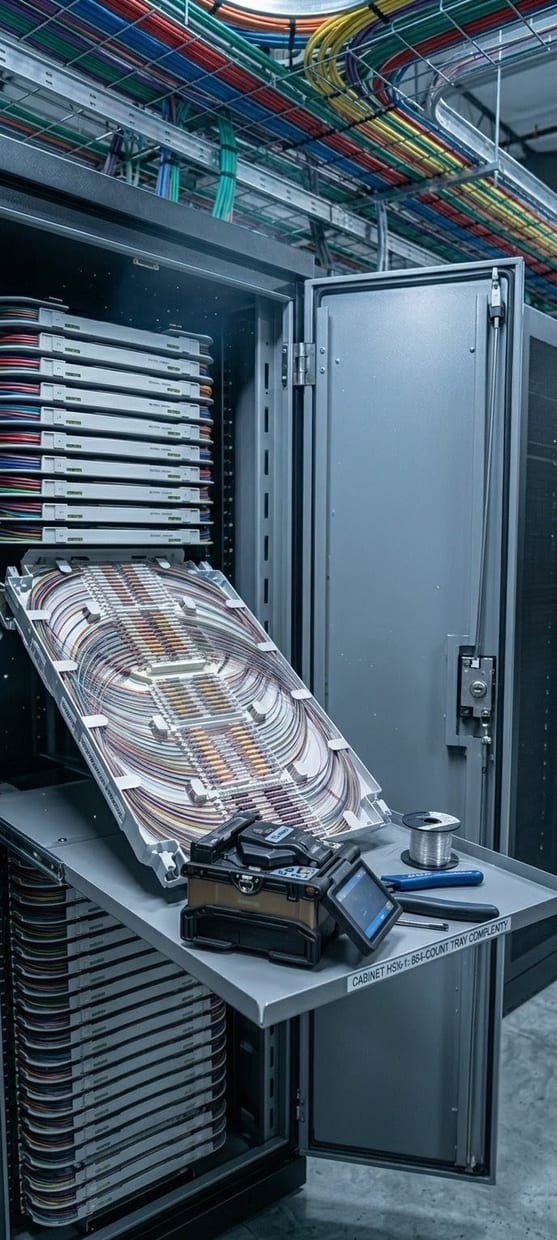
Compare that to the typical FTTH build you've been splicing on for the past few years. 48-count fibers. 144-count fibers. Maybe a 288-count on the transfer. No. These hyperscalers, their cables contain 1,728 fibers. 3,456 fibers. 6,912 fibers. Instead of splices in cases, they're splicing in cabinets, sometimes 864 fibers per tray. Same thing you've been doing, on a much larger scale.
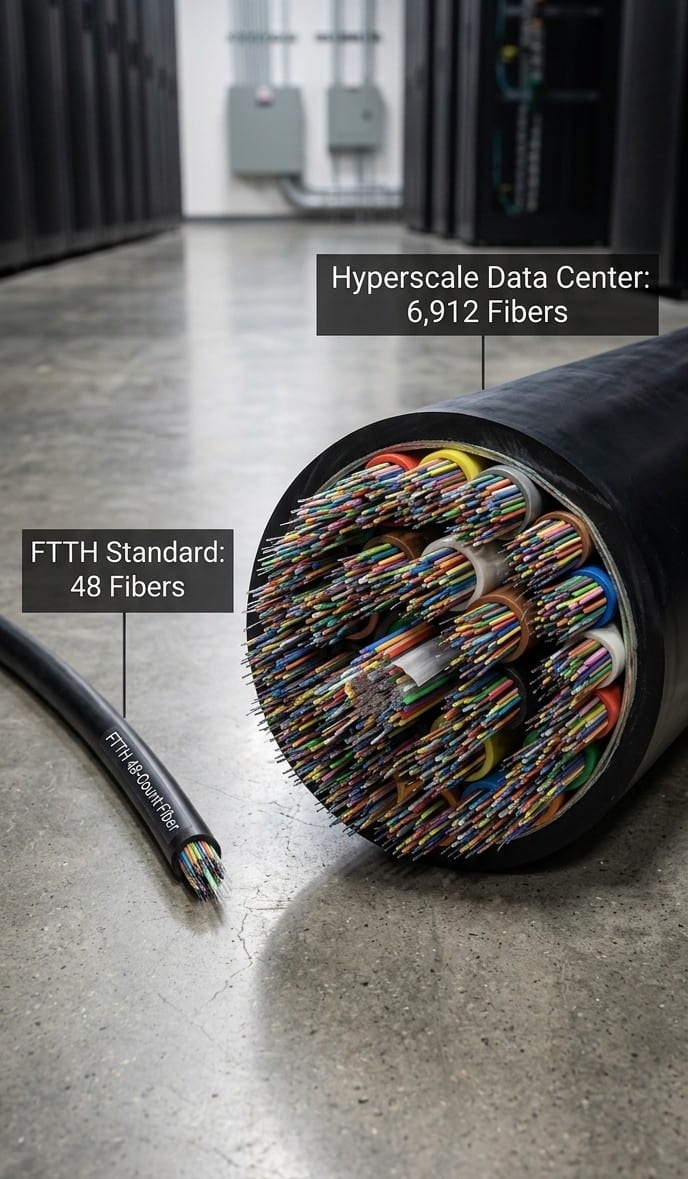
But the question now is: why do they need that much fiber?
Where all that fiber goes
Every GPU. Every rack. Every aisle is getting hundreds, if not thousands, of fibers.
The internet that's coming to your house is using a single fiber. Think about that. A single fiber can handle all of the data coming in and leaving your house. Every house is connected to those GPUs over a network of fiber. Think about that. Hundreds of millions of houses connecting to hundreds of millions of GPUs.
Somebody has to build that infrastructure. Somebody has to splice it. Somebody has to test it.
Can you keep up with that? Have you done that much splicing? Have you done that much testing? Do you even know what's involved in that? What does it take to process all those splices and all those tests?
Walking the floor
Rows and rows and rows of racks. Many, many cages. Overhead cable trays running like light highways above every aisle. Perfectly dressed, not like what you see out there in the rural fiber-to-the-home build. Everything is neat. Everything is in order. Everything is the way that it should be.
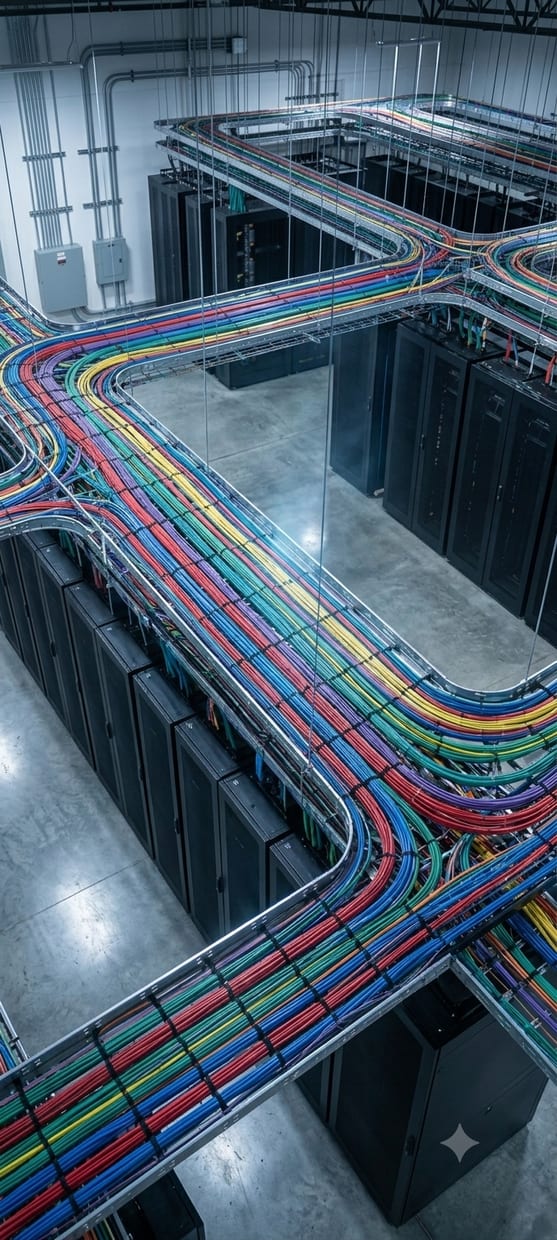
No dust. No dirt. All you can hear is the loud whistle of the GPUs and the servers running twenty-four seven.
Maybe there's a few people around. They're all working. There's no bucket trucks. There's no ladders. There's no outside plant poles. They bring their tools, their equipment in on a cart. They do their job. They leave for the day.
Why you should make the move
I think that the skill and the people in this industry are out there, and they're doing other jobs. And they don't even know what's going to happen in the next few years, where they're going to be needed.
So I'm writing this article so that people understand that in the next few years, they need to switch their skill set. They need to move from being outside plant fiber-to-the-home splicers working in rural Ohio to working inside a hyperscaler data center. No longer splicing 48-count fibers. You're now splicing 1,728 fibers. 3,456 fibers.
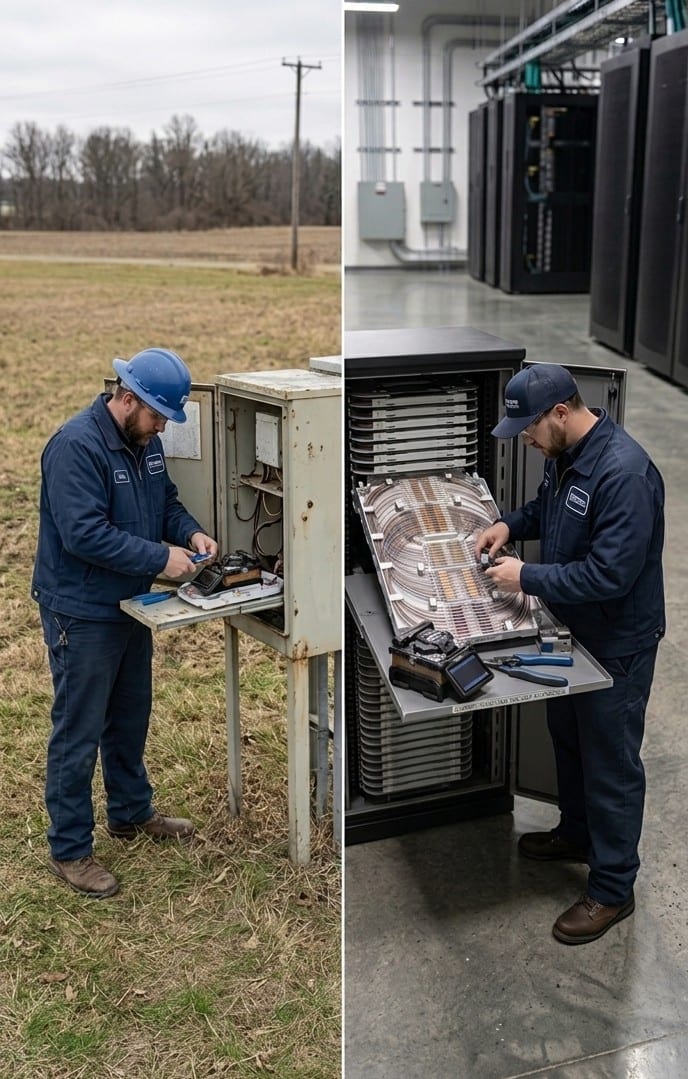
You gotta move. You gotta adjust to that. It's something new. It's something different. But this is where it's heading.
Come inside to the data center. Join the hyperscalers, because that's where the splicing work is at, and that's where it's moving to.